36 Cleeve Road, Leatherhead, KT22 7NE a1roofingofepsom@live.co.uk
Call Us :01372 632147

A leak usually shows up at the worst moment: in the middle of a downpour, often at night. This guide from A1 Roofing of Epsom sets out what to do in the first hour, what to look for once it is safe, and what to tell a roofer so the repair can be sorted quickly. If you would rather skip straight to getting it fixed, call 01372 632147.
1. Keep Everyone Safe
- If water is anywhere near a light fitting, socket or switch, turn that circuit off at the fuse board and do not use it until it has dried out and been checked.
- If a ceiling is bulging, sagging or cracking, keep people and pets out from under it. A ceiling holding water can come down without warning.
- Do not go up onto the roof or out onto a ladder in the wet or the wind.
- Only go into the loft if it has proper boards to stand on and a light. Stepping between the joists will put a foot through the ceiling below.
2. Limit the Damage
- Put a bucket or bowl under each drip, with an old towel inside to stop splashing.
- Move furniture, electrical items, rugs and anything valuable away from the wet area.
- If you can safely reach the loft, put a container under any drip you can see and move stored boxes off wet insulation.
- Mop up as you go, so water does not soak into floors and skirting.
3. Look From the Ground
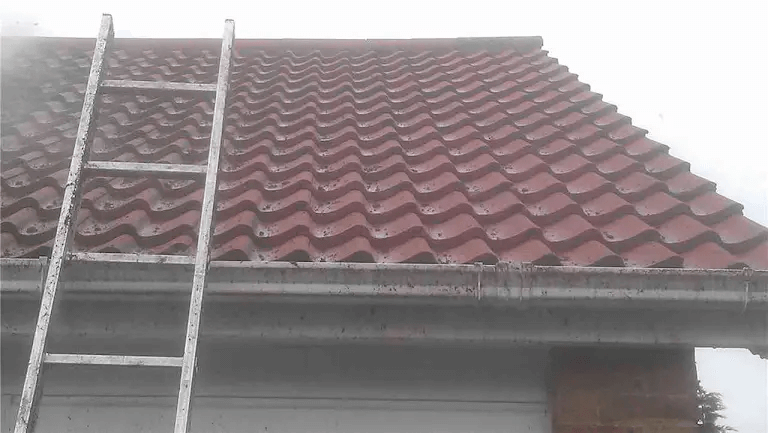
Once the rain eases, a few minutes outside can tell you a lot. Without using a ladder, look for:
- Tiles or slates lying in the garden or on the drive
- Gaps in the roof where a tile has slipped
- Gutters overflowing, sagging or pulling away from the wall
- A downpipe that is blocked or has come apart
- Lead around the chimney that has lifted or is hanging loose
4. Take Photos and Make Notes
Before you tidy up, take photos of the stain, the drips and anything you spotted from the ground. Note the date, roughly when the leak started and what the weather was doing. Notes like these help a roofer narrow down the cause, and they are useful if you make an insurance claim.
Insurance policies differ. Some cover sudden storm damage but not gradual wear and tear, so check your policy and ask your insurer what they need from you and from a roofer.
5. Call a Roofer
When you get in touch, it helps to tell us:
- Where the water is showing inside the house
- What kind of roof it is: tiles, slate, or a flat roof
- When it started, and whether it only leaks in heavy rain or wind
- Anything you have seen from the ground, with photos if you have them
Call 01372 632147 or send us the details. Our roof repairs page explains how we track a leak down and fix it.
Why Roofs Leak in Heavy Rain
Most leaks we find after a spell of bad weather come down to a handful of causes:
- Slipped or broken tiles, often after strong wind, which let rain onto the felt underneath.
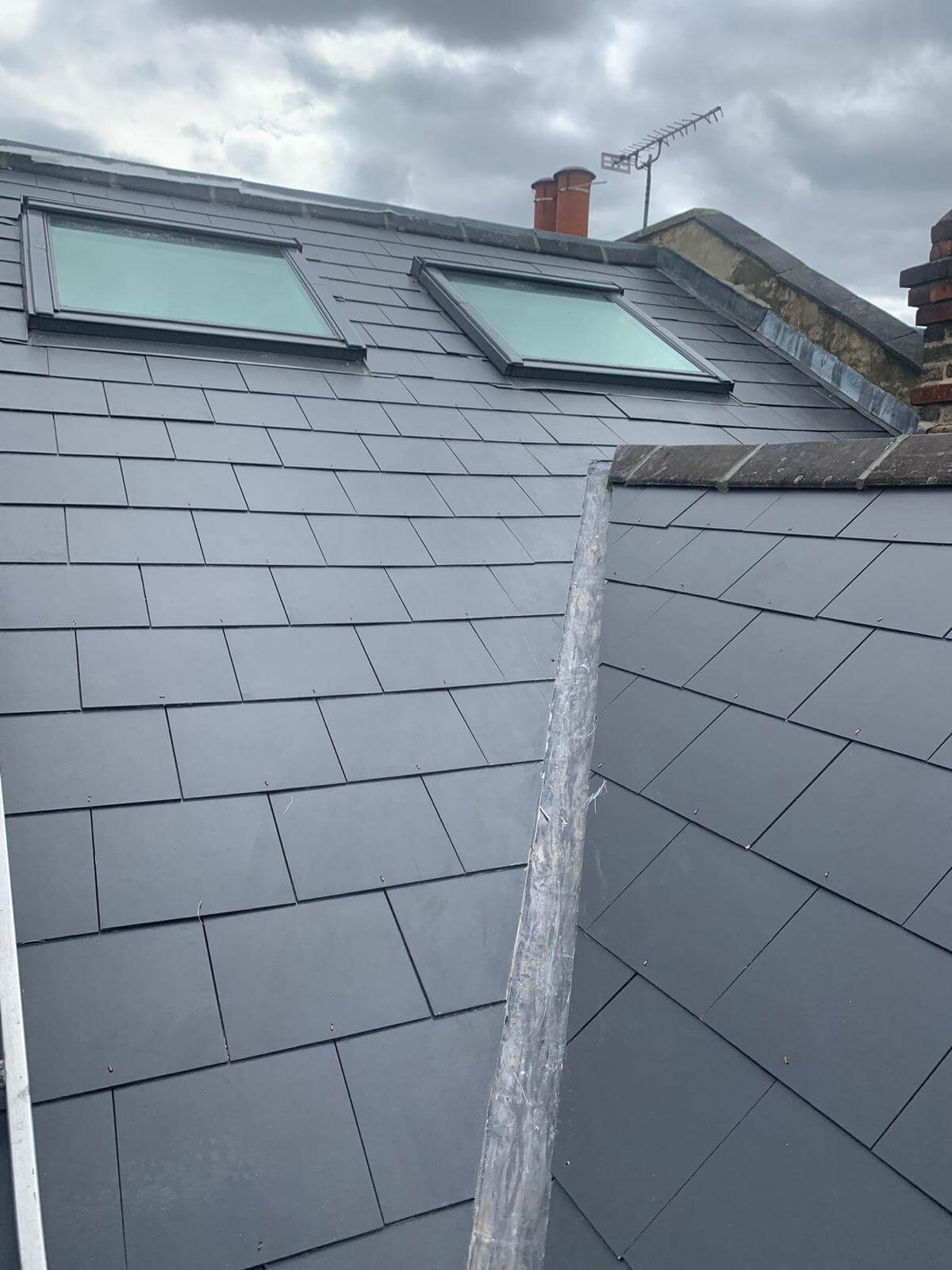
- Lead flashing around chimneys and walls that has cracked or lifted.
- Valleys, where two slopes meet and a lot of water is channelled into one place.
- Flat roof coverings that have split, blistered or worn at the edges. See flat roofing.
- Blocked gutters that overflow back under the roof edge or down the wall. See gutter repairs.
One thing that looks like a leak but is not: condensation. Warm, damp air rising into a cold loft can leave droplets on the underside of the roof and damp patches on the insulation, even in dry weather. If the damp appears on cold, still days rather than during rain, ventilation is more likely to be the cause than the roof covering.
Stopping the Next Leak Before It Starts
- Have the gutters cleared in late autumn, once the leaves are down.
- After a storm, look at the roof from the ground for slipped tiles or loose lead.
- Get small problems repaired while they are small. A few tiles cost far less to put right than wet timbers and a new ceiling.
Questions About Roof Leaks
Is a leaking roof an emergency?
Treat it as urgent if water is near electrics, if a ceiling is bulging or sagging, or if water is coming in faster than you can catch it. Keep away from that area and call a roofer straight away. A slow drip that you can catch in a bucket still needs looking at soon, because the timber and insulation underneath will keep getting wetter.
Should I put a tarpaulin on the roof myself?
No. Wet tiles and slates are slippery and fragile, and falls from roofs cause serious injuries every year. Leave it to a roofer with the right access equipment.
Will my home insurance pay for a leaking roof?
It depends on your policy and on the cause. Some policies cover sudden storm damage but not gradual wear and tear. Check your policy, take photos before anything is moved, and ask your insurer what they need from a roofer.
Leaking Roof in Epsom, Leatherhead or Nearby?
A1 Roofing of Epsom repairs roofs across Epsom, Leatherhead, Banstead, Kingston, Sutton and Worcester Park. Call 01372 632147 or send us a message.